“If Hezbollah rained white phosphorus over Tel Aviv there would be wall-to-wall coverage and every major leader would be saying it’s the worst war crime,” said one critic.
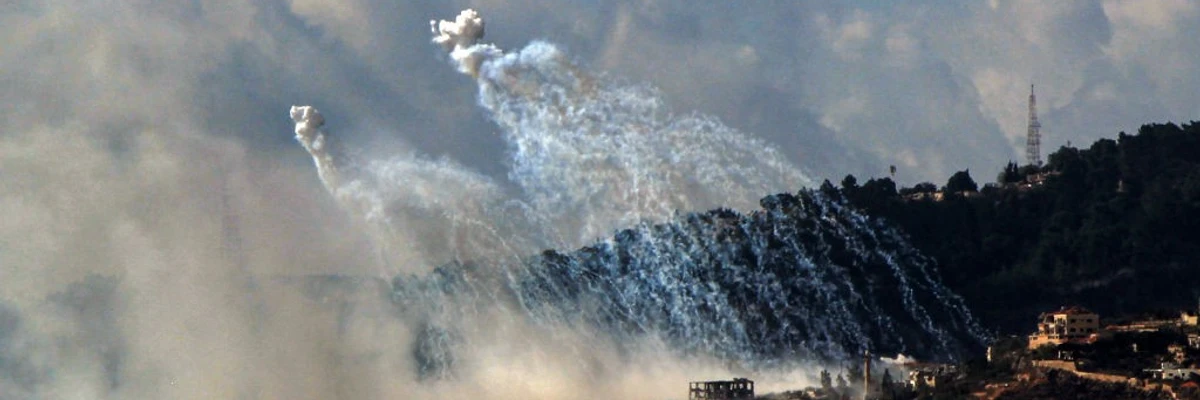
Israeli forces were accused Tuesday of the war crime of firing white phosphorus artillery munitions over populated areas of southern Lebanon as Israel escalates an assault on its northern neighbor that has killed or wounded thousands of people.
Video footage published on social media and reported by Middle East Eye shows distinctive explosions that appear consistent with the use of white phosphorus rounds over civilian areas of southern Lebanon, including the village of Kfar Kila.
While white phosphorus munitions are not completely prohibited under international law, their use in populated areas is forbidden. White phosphorus round are primarily used to create smokescreens. However, when used as an incendiary weapon, white phosphorus—which ignites on contact with air and burns at nearly 1,500°F (815°C)—can maim and kill by burning flesh straight through to the bone, often causing a slow, agonizing death. Water does not extinguish it.
Israel is currently on trial for genocide at the International Court of Justice over its military assault of Gaza, which has left more than 147,000 Palestinians dead, maimed, or missing.
Israeli forces have also used white phosphorus in previous wars, including during the 2006 invasion of Lebanon and over a United Nations school during the 2008-09 Operation Cast Lead invasion of Gaza. Responding to a 2013 petition to Israel’s High Court of Justice filed by human rights groups including Human Rights Watch (HRW), the Israel Defense Forces said it would no longer use white phosphorus in populated areas, with “very narrow exceptions” that it would not disclose.
U.S. forces used white phosphorus following the invasion of Iraq and elsewhere across the region during the post-9/11 so-called “War on Terrorism.”
“To avoid civilian harm, Israel should stop using white phosphorus in populated areas,” Fakih added. “Parties to the conflict should be doing everything they can to spare civilians from further suffering.”
Credit: Brett Wilkins Original Article