Why We Should Be Hopeful for Tomorrow By Vahid Razavi
The news pouring in from wars abroad, from collapsing economies, from the daily footage of the human condition at its most broken — it is genuinely depressing and heart-wrenching. Over the past several years, social media has quietly conditioned us to scroll past atrocities, to treat crimes against humanity as just another piece of content between a recipe video and a cat meme. As I travel, I hear the same thing everywhere: people feel helpless. They don’t know what to do. They can’t see how one person can change any of this.
At the same time, I have friends who refuse to look away — who follow the news obsessively, who march, who organize, who show up. They’re exhausted, but they keep going. I admire them more than they know.
So amid endless wars, corrupt leaders, human rights abuses, and ongoing genocide — why remain hopeful? Why stay engaged at all?
Let me tell you why.
The first thing we need to reckon with is the disconnect between humanity and the people currently steering the technology that shapes our world. The Silicon Valley boys — the PayPal Mafia who dream of escaping to Mars while naming their children things like X Æ A-Xii — are, to put it plainly, deprived of basic human warmth. Peter Thiel and his ideological offspring, who built companies like Palantir, have constructed an empire on the business of surveillance, warfare, and the enabling of state violence. Alex Karp and his Palantir are not building the future — they are monetizing destruction, profiting from the machinery of genocide. I don’t say this with hatred. I say it with pity. To be that cut off from what it means to be human is its own punishment.
What these men fundamentally lack is empathy. And empathy, it turns out, is not a soft skill — it is the very thing that separates wisdom from weaponry.
They remind me of Oppenheimer — not the Hollywood-glorified version, but the real one: the mad scientist who split the atom without pausing to ask whether he should. The Artificial Intelligence they are building reflects their own image: cold, calculating, indifferent to consequence, hallucinating confidence without genuine understanding. Watch a Peter Thiel interview sometime. The man speaks like a deer frozen in headlights — technically alive, emotionally absent. And Larry Ellison, founder of Oracle, had his America’s Cup sailing team caught cheating in 2013, a scandal that contributed to the tragic death of a crew member, all so he could choke on a trophy. These are the men steering the ship.
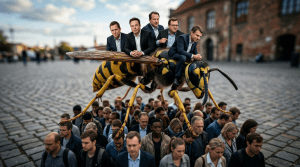
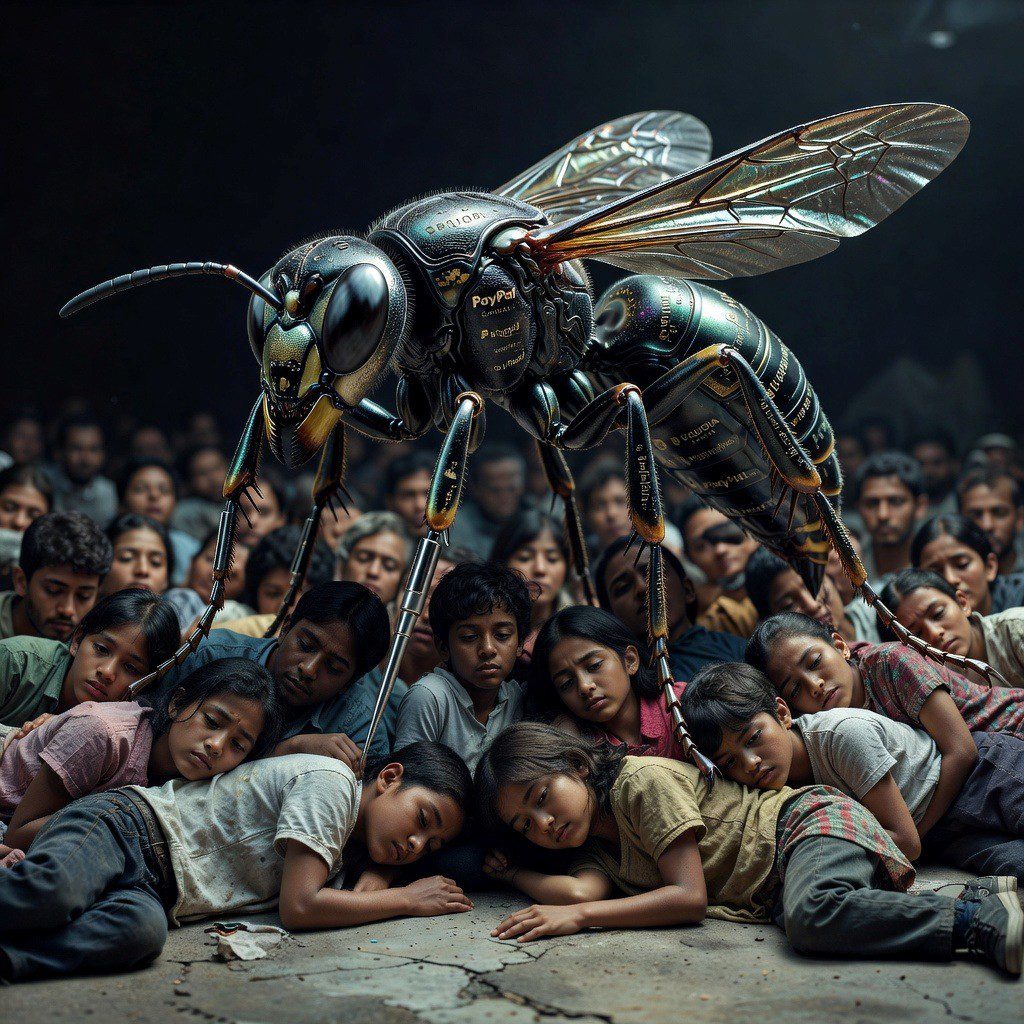
The general public sees through them. No amount of purchased media platforms or carefully managed Twitter/X feeds can manufacture the admiration that has to be earned. These billionaires — this Epstein-class of tech oligarchs — are not admired. They are watched with the wariness one reserves for a parasitoid wasp: a creature that specializes in the slow, calculated destruction of its host from the inside out. The metaphor is not mine alone — it is what people sense instinctively when they watch these men speak.
And here is where it gets interesting: the AI they’ve built is failing them in a very specific way. It hallucinates. It fills the gaps in its knowledge with confident fiction. But so do they. Leaders without empathy fill the gaps in their understanding with more cruelty, more surveillance, more violation of digital and human rights. Fools with the best tools are still fools — and their tools will not save them. If anything, the tools accelerate their unraveling.
Evil men and their machines do not prevail. History is long, and it is littered with their kind.
I don’t intend to preach religion or impose my belief system on anyone. But I do believe in a collective conscience — something that connects us to one another, to the earth, to what is decent in the human story. Call it what you will: God, Allah, the universe, collective humanity. Whatever name you give it, it has outlasted every empire and every tyrant that has ever tried to extinguish it. This planet has been here for billions of years. We are all passing through. Including these tech oligarchs and the surveillance systems they built. Including their bunkers in Patagonia and the panic rooms quietly installed in their Malibu compounds. Every dog has its day — and the countdown on their particular day is already underway. That’s precisely why they’re building bunkers. They know it too.
What gives me genuine, unshakeable hope?
It is the millions who take to the streets against endless wars and the corrupt regimes that send young men and women to die in conflicts manufactured for profit. It is the people who open their homes to migrants fleeing the very wars these oligarchs enable. It is the activists who show up — tired, underfunded, ignored by mainstream media — and show up again the next day anyway. It is the collective humanity of ordinary people caring for one another with passion, love, and a stubborn refusal to stop seeing each other as human.
That force is not loud. It does not have a Twitter account with a hundred million followers. It does not own a news network. But it is real, it is vast, and it is older and more powerful than any of them.
Stare into the darkest night long enough and you will see the brightest stars. Stay still, and patient, and human — and eventually, if you are lucky, you will catch a shooting star crossing the sky.
These Silicon Valley parasites and the tools they built are hallucinating. They are filling the void where empathy should live with noise, with cruelty, with the illusion of power. But a system built without human values at its core is a system already failing — it just doesn’t know it yet.
Their kind belongs in the dustbin of history. And tomorrow — not in some distant, abstract future, but tomorrow — belongs to us.
Vahid Razavi is the producer of Forever Peace Now Documentary. Author of a couple of books including The Age of Nepotism and Ethics in Tech and Lack Thereof. ForeverPeaceNow.com